Compact Vs Full-Size Tractors: What Size Do You Actually Need For A Coffs Harbour Property?
Choosing the right tractor is an important decision for anyone managing land, whether it is a lifestyle block, small farm, or larger rural property. When looking at tractors, Coffs Harbour property owners commonly compare compact and full-size models to determine which machine best suits their needs. While both options offer versatility and power, they are designed for different workloads, land sizes, and operating conditions.
Understanding the differences between compact and full-size tractors helps ensure you invest in equipment that matches how your property is used day to day. From mowing and slashing to earthmoving and material handling, selecting the right tractor supports efficiency, safety, and long-term value.
For many lifestyle blocks, a sub-compact or compact tractor is the practical starting point. A utility or full-size tractor becomes more appropriate when you need larger implements, heavier loader capacity or sustained power. The compact vs full-size tractor decision should start with your hardest regular job, not acreage alone.
What Size Tractor Do You Need for Your Property?
Acreage gives you a useful starting point, but it should never be the only sizing factor. For properties under two acres, a sub-compact tractor below roughly 25 HP may be sufficient for mowing, landscaping and light loader work.
For 2–10 acres, sub-compact and compact tractors around 20–40 HP cover many lifestyle-block jobs, including mowing, slashing, fencing and general material handling.
On 10–50 acres, buyers often move towards compact or utility tractors in roughly the 35–75 HP range, particularly when larger implements, heavier loader work or regular cultivation enters the picture.
Beyond
50 acres, utility and full-size tractors above approximately 60 HP become increasingly relevant for larger implements and sustained agricultural work. These are general class-level guides rather than model recommendations. A steep five-acre property with demanding loader work may require more tractor than a relatively flat 20-acre block used primarily for mowing.
What Is a Sub-Compact Tractor, and Is It Enough?
Sub-compact tractors bridge the gap between ride-on mowers and conventional compact tractors. They can make sense for smaller lifestyle properties where mowing, light loader work and general maintenance are the priorities, while their smaller dimensions also help around sheds, gardens, gateways and confined areas.
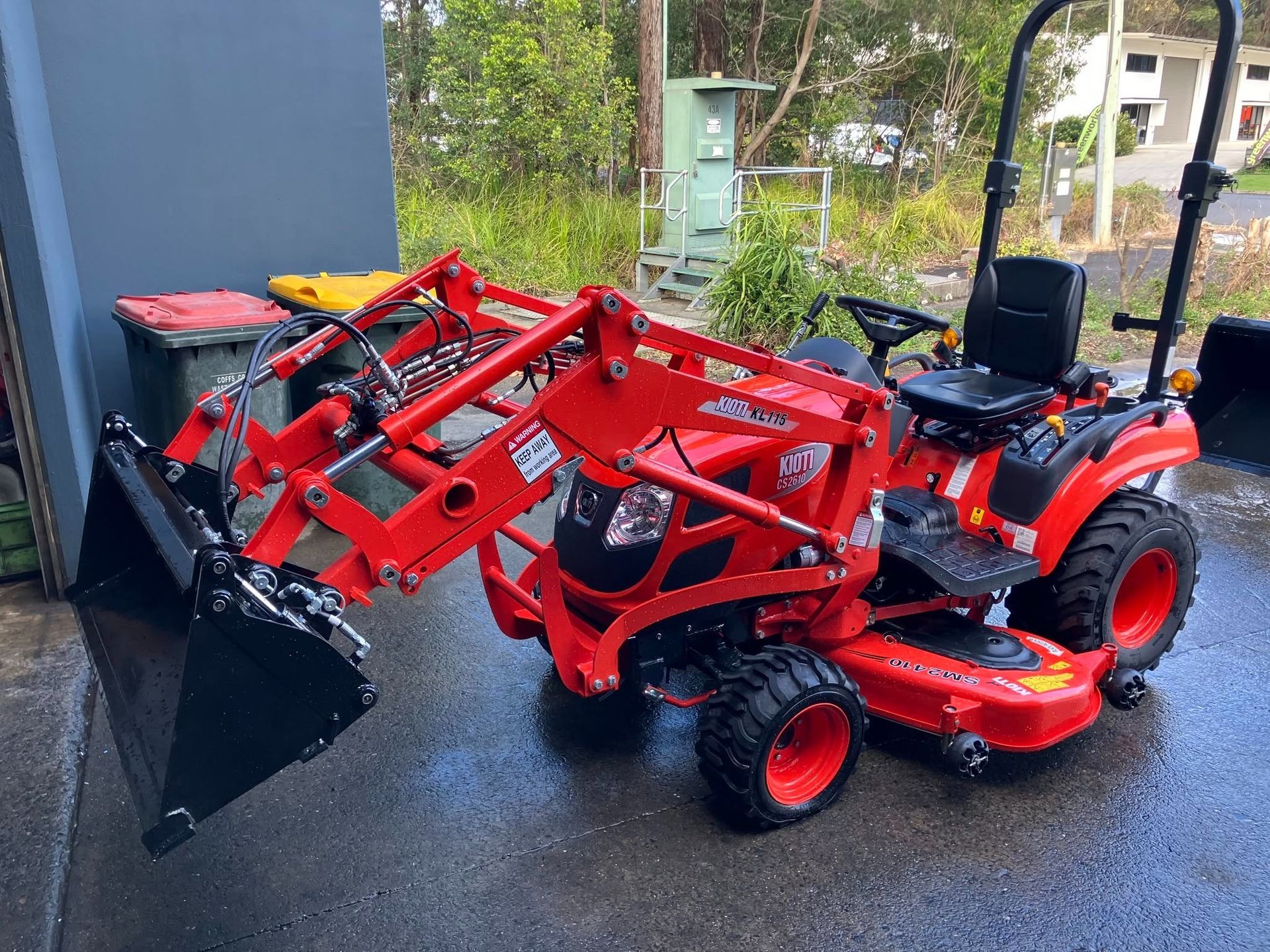
NCCE's Kioti range includes sub-compact and compact options for acreage work. The limitation appears when jobs become heavier. If you regularly need to move substantial loads, operate demanding ground-engaging implements or run larger slashers, stepping up to a compact or utility tractor can provide more useful working capacity.
How Does Coffs Harbour Terrain Change the Answer?
Mid North Coast conditions can make tractor sizing more complicated than an acreage figure suggests. On steep or undulating hinterland blocks, wheelbase, ground clearance and centre of gravity can matter as much as raw horsepower. The machine needs to suit the terrain it will actually work across.
Soft coastal ground presents another consideration. After periods of rain, a heavier tractor can contribute to greater compaction and rutting, so a lighter compact machine may be preferable where it still has enough capacity for the required work.
Access also matters on established acreage. Orchard rows, gateways, sheds and fence lines can restrict where a larger tractor can operate. Measure your narrowest regular access points before buying, and consider the ROPS or cab configuration where overhead clearance is limited.
The Most Common Sizing Mistake — and What It Costs
The biggest mistake is buying for acreage rather than workload. Buy too small and you may continually operate the tractor close to its limits. Loader jobs take longer, some implements become impractical and the machine can experience unnecessary strain from regularly performing work beyond its intended class.
Buy too big and you create different problems. Purchase and fuel costs rise, soft ground carries more weight, and manoeuvring around sheds, fences and established infrastructure becomes harder.
Example: A five-acre owner who mainly mows and performs light loader work may gain little from a large utility tractor if it cannot easily work between existing sheds and fence lines. Another five-acre owner regularly moving heavy materials may genuinely need the extra capacity. The acreage is identical, but the workload changes the answer.
What Are Compact Tractors Designed For?
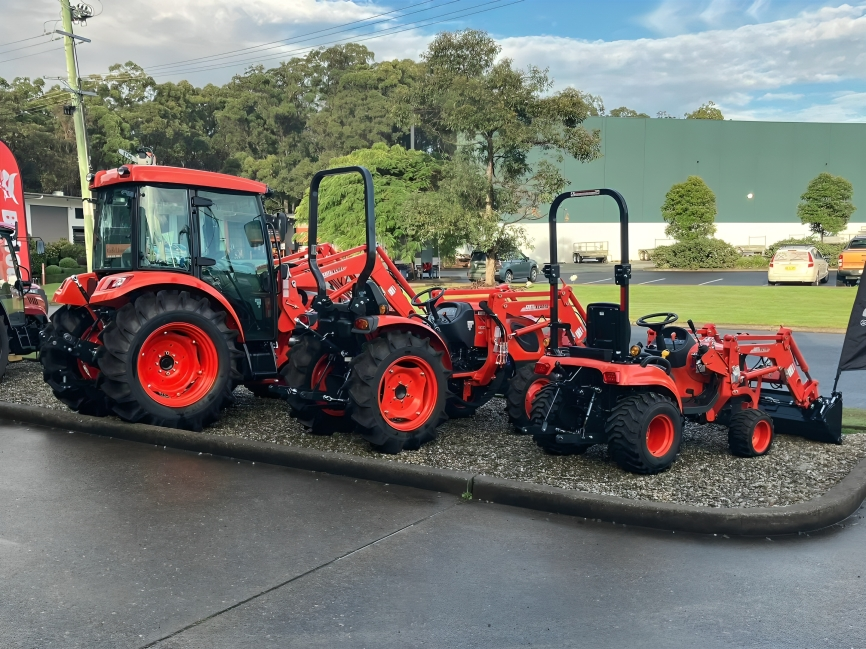
Compact tractors are often a practical fit for lifestyle acreage and smaller working properties. As a general category, they commonly occupy roughly the 25–60 HP range, although manufacturer classifications overlap.
They combine useful power with manoeuvrability for slashing, loader work, fencing, rotary hoeing and general property maintenance. Kioti's compact range includes models across several sizes and configurations. Depending on the model, buyers can find ROPS or enclosed-cab options, allowing the tractor to be matched more closely to working conditions and access requirements.
Horsepower should not make the decision by itself. Loader lift capacity, wheelbase, ground clearance, tractor weight and PTO output can all determine whether a particular machine will perform the work you have planned.
Advantages of compact tractors for Coffs Harbour properties
Compact tractors offer practical benefits for property owners who need flexibility without the scale of larger agricultural machinery. Their lighter footprint can be an advantage on softer ground and in maintained areas.
Common advantages include easier handling in tight spaces, lower operating and maintenance requirements, compatibility with a wide range of attachments, and reduced ground disturbance. For many acreage properties, compact tractors provide a balance between capability and convenience.
What Can a Full-Size Tractor Handle That a Compact Can't?
Full-size tractors make sense when heavier work and sustained productivity justify the additional size. Larger-scale slashing, cultivation, heavy material handling and bigger implements can require more power, weight and capacity than a compact tractor provides.
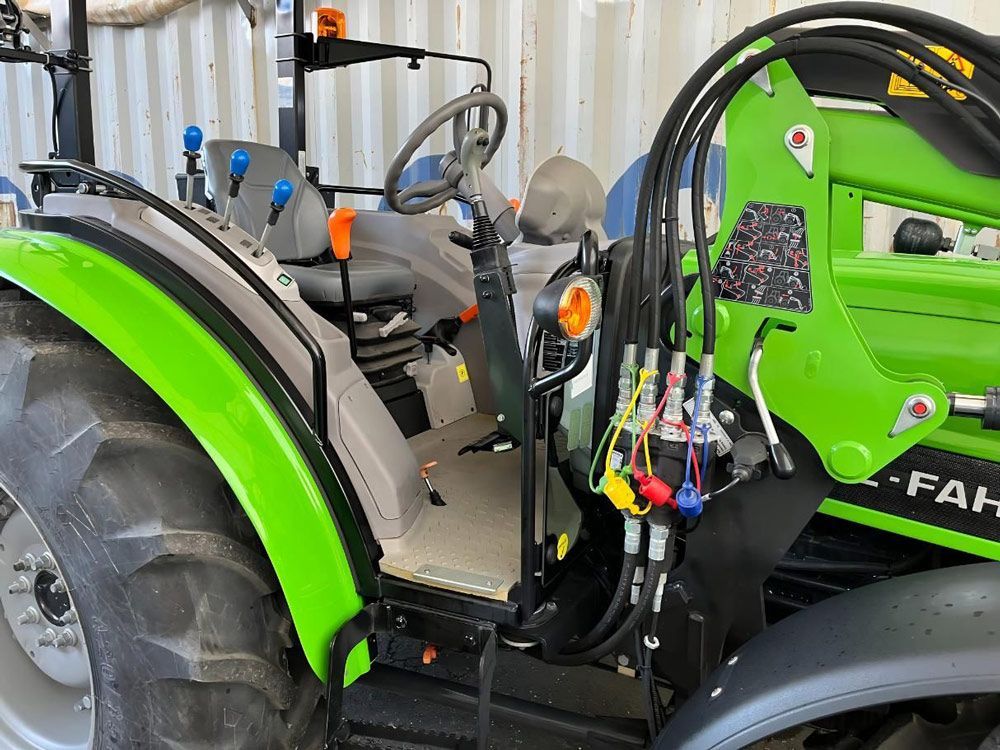
NCCE carries DEUTZ-FAHR tractors for agricultural applications, alongside JCB equipment for operators with larger-scale requirements. Bigger is not automatically better, however. A larger tractor costs more to purchase and operate, needs more room to manoeuvre and puts more weight onto the ground.
On a five-acre lifestyle block, extra horsepower provides little benefit if the tractor cannot comfortably get through the areas where you actually need it.
Advantages of full-size tractors in the Coffs Harbour region
For larger rural properties and commercial operations, full-size tractors provide the performance needed to handle high workloads efficiently. These machines are built for productivity across open land and challenging terrain.
Benefits often include higher horsepower for demanding applications, greater towing and lifting capacity, the ability to operate large agricultural implements, and durability for extended operating hours. Where scale and efficiency are priorities, full-size tractors are often the preferred option.
Typical tractor use cases around Coffs Harbour
Local property types and conditions strongly influence tractor selection. In the Coffs Harbour area, common use cases include lifestyle properties requiring mowing, slashing, and light earthworks, small farms managing fencing, feed handling, and general maintenance, and larger rural properties needing heavy-duty land management.
In many cases, compact tractors Coffs Harbour owners choose offer flexibility for mixed-use properties, while full-size tractors are selected where power and efficiency are critical.
Will Your Tractor Run the Implements You Need?
Choose the tractor and implements as a working system. If you plan to use a slasher, rotary hoe, finishing mower or another PTO-driven attachment, check the implement's PTO horsepower requirement, not just the tractor's engine horsepower. The two figures are not interchangeable.
Three-point linkage compatibility and capacity also matter. For loader work, check the loader's rated lift capacity against the materials you intend to handle. NCCE supplies tractor implements for property maintenance and agricultural work.
Think about future requirements as well. Allowing sensible spare capacity for an implement you genuinely expect to add can prevent you from outgrowing the tractor, but buying substantially larger "just in case" can create unnecessary cost and inconvenience.
Why Local Advice Matters When Choosing a Tractor
Online sizing guides cannot see your slopes, wet areas, gateways or sheds. North Coast Construction Equipment has operated in Coffs Harbour for more than 31 years, with its workshop on Cook Drive. That local experience helps turn general tractor specifications into practical advice for Mid North Coast properties.
Before discussing models, make a list of your acreage, terrain, narrowest access point, regular jobs, planned implements and heaviest loader tasks. Those details provide a far better basis for choosing a machine than acreage or horsepower alone.
Servicing and Long-Term Support
A tractor is a long-term working asset, so servicing and parts support should form part of the purchase decision. Maintenance requirements depend on the tractor, operating hours and conditions, and our guide to how often your tractor really needs servicing explains the main considerations.
Choosing equipment that can be supported locally can make ownership simpler long after the initial purchase.
Speak with a local tractor specialist
If you are weighing up a compact vs full-size tractor, start by defining the work rather than choosing the biggest machine within budget. Bring NCCE your property size, terrain, access restrictions, loader requirements and planned implements so the team can help narrow down suitable options instead of recommending more tractor than you need or a machine you are likely to outgrow.
Explore tractors in Coffs Harbour and talk through your block and workload with the North Coast Construction Equipment team.
Frequently Asked Questions
What size tractor do I need for 10 acres?
For many 10-acre properties, a compact tractor around the 30–50 HP class is a reasonable starting point. Terrain, implements and loader requirements can move the ideal machine above or below that range.
Is a compact tractor strong enough for a front-end loader?
Many compact tractors support front-end loaders, but capability varies between machines. Check the loader's rated lift capacity against the loads you need to handle rather than relying on engine horsepower.
What horsepower do I need to run a slasher?
Check the slasher manufacturer's required PTO horsepower. PTO horsepower differs from engine horsepower, so the implement requirement should be matched against the tractor's PTO specification.
Are sub-compact tractors worth it?
Yes, when the work suits them. They can be a practical choice for smaller acreage involving mowing, light loader work and general maintenance, particularly where manoeuvrability matters.
Can a full-size tractor damage soft coastal ground?
Heavier equipment can contribute to greater soil compaction and rutting when the ground is soft. Tractor weight and site conditions should therefore be considered alongside horsepower.
Should I buy a bigger tractor for future work?
Allowing some spare capacity for realistic future requirements can make sense. Buying substantially bigger for hypothetical jobs can increase purchase and running costs while reducing manoeuvrability.